“Office is dead” is the laziest line in commercial real estate (insert eye roll here).
Here's what I actually believe: the office market isn't dying — it's splitting in two. On one side is commodity office — beige, generic, interchangeable, priced by the square foot and forgotten by the time you reach the parking lot. That side is in real trouble. On the other side is scarce office — buildings that make you stop, look up, and go “well, that's interesting.” That side is doing just fine.
The dividing line is identity. A building with identity does something a spreadsheet can't: it gives people a reason to show up. Tenants don't lease square footage anymore — they can get that anywhere, cheaper. They lease the story the building tells about who they are.
Oklahoma City has more of these than its reputation lets on. Here are five I can't stop thinking about.
1.Guernsey — Alley North
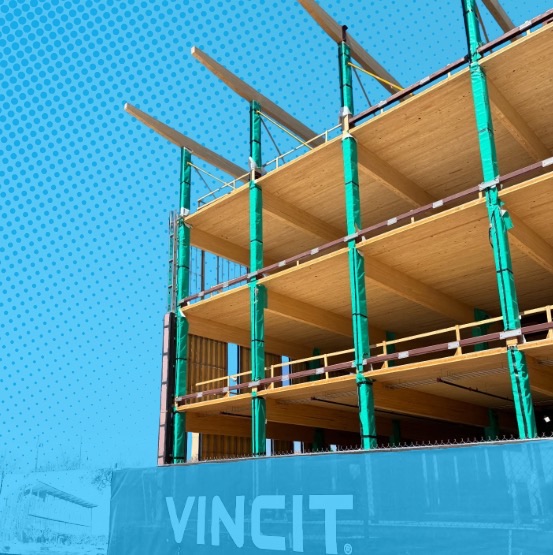
Start with the one that made me write all this down. Guernsey — a 100-year-old OKC engineering and design firm — is building Oklahoma's first multi-story mass-timber office building as its new headquarters: four stories, 63,221 square feet, at NW 13th & Broadway.
They didn't go shopping for square footage. There's plenty of empty office downtown if that's all you want. They're building out of wood — warmer, faster to build, lower-carbon — because the material is the message. It says exactly who they are: forward-looking, unafraid, a little contrarian. And it anchors Alley North, the new mixed-use district from Pivot Project and Guernsey at the seam of Midtown, Automobile Alley, and the Innovation District. The building is the first thing out of the ground there, and it sets the tone for everything that follows. That's identity doing structural work.
2.1141 N. Robinson — The Baptist Building
Full disclosure: this is a shameless plug. I represent this building, and I'm on the development team helping bring it back to life. It is not every day a broker gets to do that, and I'm elated about it — so I'm not going to pretend otherwise.
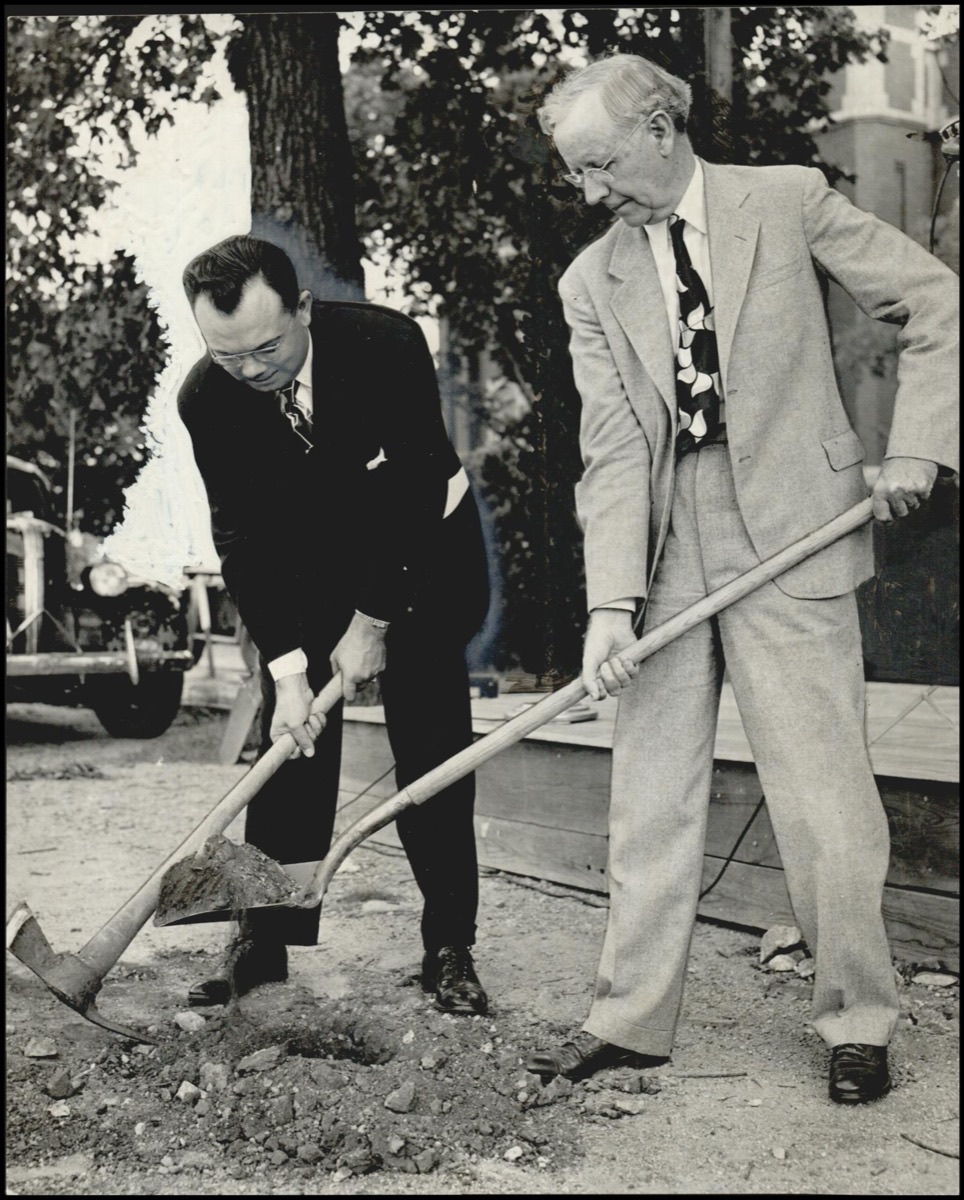
The Baptist Building was designed in 1948–49 by architects Bertie Noftsger and William Lawrence as the administrative home of the Oklahoma Baptist organization — which also ran its bookstore and printing operation here for years. Here's the detail I love: Noftsger and Lawrence made their name in the '20s and '30s doing Art Deco, then became really known for mid-century modern by the late 1940s — and this building catches them mid-stride. The exterior is unmistakably Art Deco: poured-in-place formed stone (not limestone, despite what everyone assumes), strong vertical bays, crisp geometric ornament. Step inside, though, and the original wood-panel walls and clean lines hit you with full Mad Men mid-century. One building, two eras, one seamless handoff between them. Last year it earned a spot on the National Register of Historic Places.
The restoration honors all of that while making it work for how people use space now — including a genuinely modern move: a half-acre covered parking lot with a solar canopy that feeds power back into the building and lowers the cost to operate it. (A nod to LAUD Studio here — the canopy's cantilevers were designed to echo the Art Deco lines on the building's face. Even the parking has identity.)
You cannot manufacture this. A new building can be beautiful; it cannot be old. That's the rarest identity of all — the kind that took 75 years to earn.
3.Palomar — MAPS 4 Family Justice Center
Some buildings get their identity from material. Some get it from history. Palomar's gets it from purpose.
Palomar is Oklahoma City's family justice center — one roof where survivors of domestic violence, sexual assault, human trafficking, elder abuse, and childhood trauma can find advocacy, therapy, medical care, and legal help without retelling their worst day to a dozen different agencies. The new MAPS 4–funded headquarters rising in Midtown at 1135 N. Hudson is a three-story, 72,000-square-foot building that will roughly triple the space and double the capacity when it opens in 2027.
This is architecture in service of dignity — what I'd call mission-occupied space, where the building doesn't just house the work, it elevates and facilitates it. Every design decision — sightlines, light, where a child waits, how private a door feels — carries weight a typical office program never has to hold. Palomar found a rare alignment between what they exist to do and the space they'll do it in. A building that makes a frightened person feel safe is doing the hardest job in the built environment. That's an identity worth getting loud about.
4.The Peake — the campus that contradicts itself
Now for the curveball. The Peake is the former Chesapeake Energy campus at 63rd & Western, and it's a genuinely strange, wonderful thing: iconic all-glass structures with sharp angles playing with light and form, sitting right next to brick buildings that look like they were lifted straight off the Georgetown University quad — elongated windows, dormers, the whole collegiate costume. And yes, there are offices in all of it.
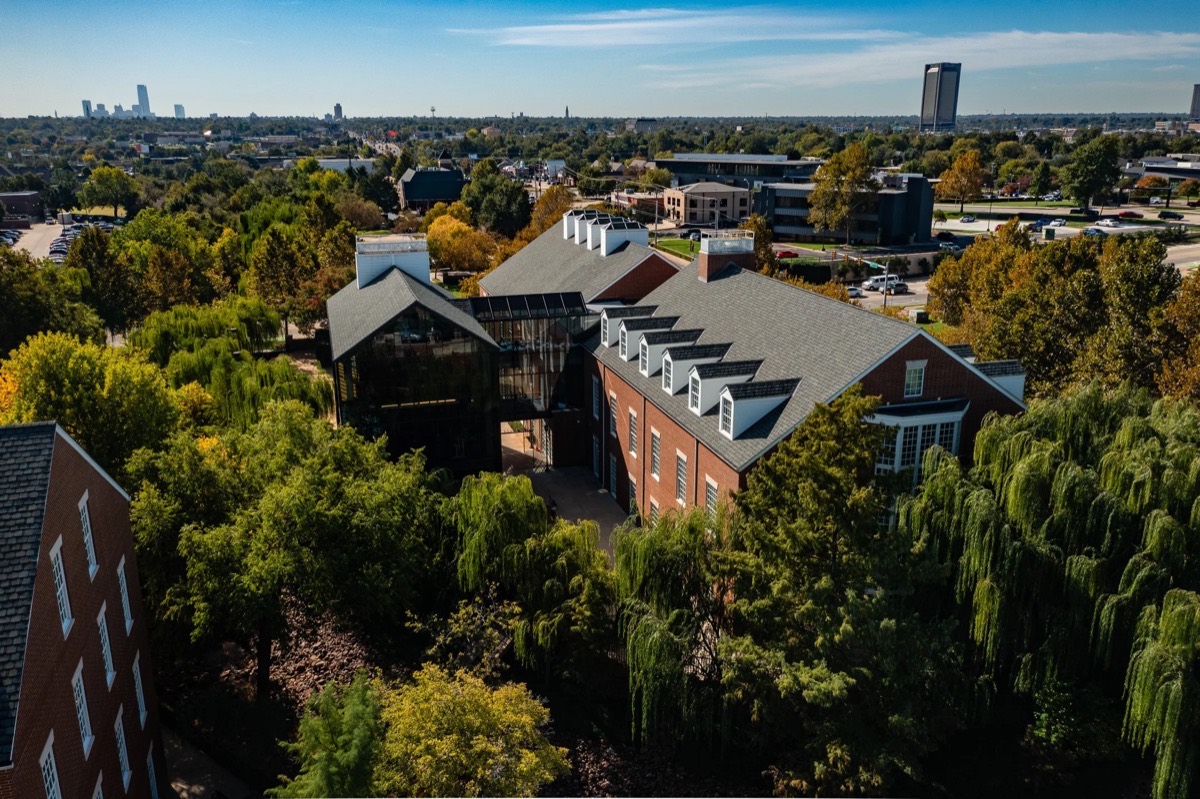
Mark Beffort and his Robinson Park team closed on the west half of the campus in December 2025 — fourteen buildings — and rebranded it The Peake, a nod to the campus's own history. They're repositioning it, with plans to have it fully reworked by 2027 and a long-term path toward true mixed-use. It already carries an absurd menu of amenities — fitness and rec, indoor and outdoor courts, a food hall, stadium-style conference space — and if it genuinely becomes mixed-use, that menu only gets longer. Add the Whole Foods across the street and the highway around the corner, and it's genuinely got a little something for everyone. A campus this idiosyncratic was never going to be commodity space. Its split personality is the identity.
5.Convergence Tower — ahead of its time, again
The Peake was ahead of its time when it was built. Convergence Tower will be ahead of its time a couple of years from now.
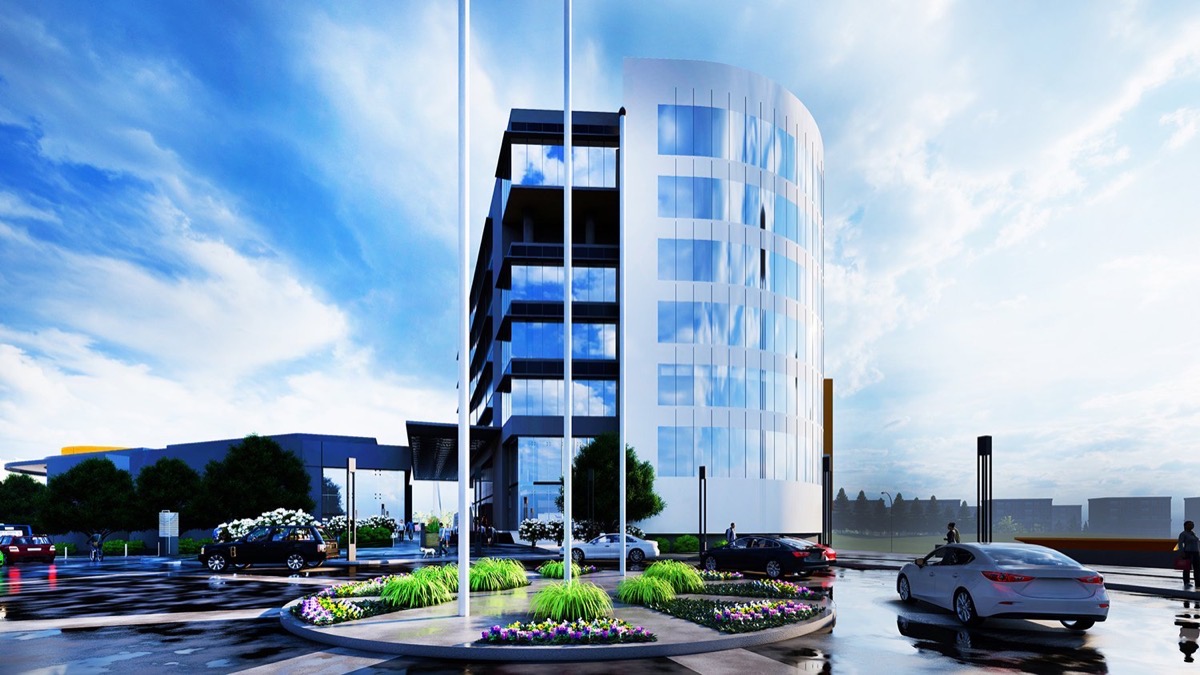
It's a domineering eight-story, Class A tower that came out of the ground during COVID and now sits at the heart of OKC's Innovation District. But the building is almost the least interesting thing about it. Convergence functions as a hub — a crucible for technical creativity built to pull bio-medical, tech, and engineering companies to Oklahoma City. The tenant roster already reads like a thesis statement: Wheeler Bio, Boeing, CrossFirst Bank, OU (its logo now on the building's exterior), the Oklahoma Aerospace & Defense Innovation Institute, and Tinker.
And here's the part that gives me chills. Stand in the open walkway between Convergence Tower and Innovation Hall: to the north, the OSU logo on the former Baker-Hughes building; to the south, the OU logo on the Medical Research Park. It is, literally, the convergence of ideas. So stinkin' clever. Put those people in one place near the universities and the health center, and collisions happen — that's the whole point.
And the capital stack that made it possible was as creative as the building itself — public incentives, a TIF district, C-PACE financing, conventional debt, EB-5 capital raised through the federal immigrant-investor visa program, and private investment, all braided together. (Don't worry about parking, either — there's more of it underground than they could ever possibly fill.) When the building and the money behind it both refuse to be ordinary, you get something the market hasn't fully caught up to yet.
The point
Five buildings, five completely different sources of identity — material, history, mission, contradiction, ambition. Not one of them competes on price per square foot, and not one of them has to. Because there is real demand for places people identify with — places that spark inspiration or line up with what they actually value.
So how do you put a price tag on identity? On a moment of inspiration? On what you genuinely value? You can't — and that's exactly why this kind of space wins.
If office were really dead, there'd be no room for any of this innovative thinking in OKC. There clearly is. Sure, I'm a little biased. But as a guy with four dogs at home who bark every time someone so much as walks past the window, I have zero intention of working from the couch — I want a building worth showing up for.
Look around your own four walls. Is your building still earning its rent — or are you just paying for square footage?
I'm keeping a list of OKC buildings with real identity. Hit reply and tell me the one that makes you want to show up.