Last week felt like the internet sprained something. Microsoft email fell over for a day. The FAA grounded every flight in the country. Chase, then a half-dozen other banks, then Apple, then — I’m not making this up — the NSA. Everyone reached for the same word: cyberattack.
Almost none of it was. Those were ordinary breakdowns, bad luck stacked six days high, and officials have said as much.
But one event in the pile was an attack, and it’s the one worth your attention — because it didn’t break into 178 companies. It broke into one, and got all 178 for free.
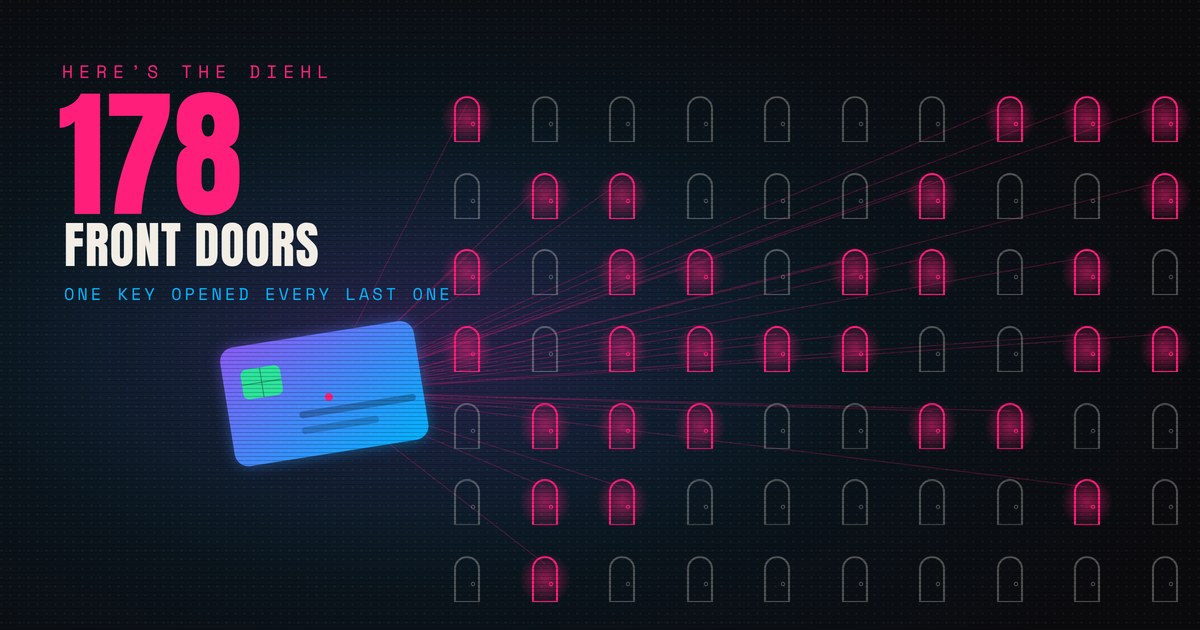
On Monday, someone slipped malicious code onto the websites of 178 major organizations — the BBC, CNN, Zoom, HSBC, IKEA, Salesforce, a long list of names you’d recognize. For about seventeen hours, those sites quietly tried to skim visitors’ credit cards and swap their crypto payments into a stranger’s wallet. The companies’ own security never fired. The bad code walked straight past it wearing a trusted badge.
Here’s the badge. All 178 use a tool called Optimizely — the kind of behind-the-scenes software that lets a marketing team tweak a website without bugging the engineers. Thousands of companies run it. And that’s the whole trick.
Imagine a vendor that thousands of landlords hire to update the screen in their lobby. Nobody wants to cut a new key for every tech, so every landlord hands the vendor one master keycard. Then somebody picks the lock at the vendor’s front desk, prints a keycard, and for one afternoon walks into 178 lobbies, swapping the “Pay Your Rent Here” kiosk for a convincing fake that pockets every card number. The tenants’ own deadbolts? Irrelevant. The fake rode in on the trusted keycard. Building security held the door.
That’s a supply-chain attack, and it’s the most important two words a non-technical business owner can learn this year. Nobody kicked in 178 doors. They compromised the one vendor that already had keys to all of them.
The good news: it got caught fast and cleaned up the same night. The unsettling news: it was easy, it was cheap, and lightning that strikes once this cleanly tends to strike twice.
Open your own website’s hood and you’ll find the same arrangement. The chat bubble in the corner. The booking widget. Google Analytics. A review carousel. The payment plugin. Each one is code written by someone who isn’t you, loaded live onto your page every time a customer visits, quietly updating itself whenever that vendor pushes a change — and most of them can read anything a visitor types, including on the page where they pay you.
You didn’t write that code. You can’t see when it changes. And you’ve handed out a dozen master keycards without a list of who’s holding them. Not because you were careless — because that’s just how modern websites are built. Which is exactly the problem.
You don’t need a security team to do the first two. You need an afternoon and the willingness to ask your web person three pointed questions.
Ask whoever runs your site for a plain list of every third-party tool that loads on it — especially on your login and checkout pages. You cannot protect what you don’t know is running.
Make sure card details are entered into a field your payment processor hosts — Stripe, Square, PayPal — not a box sitting on your own page. And keep marketing and chat tools off the payment page entirely. That one design choice is what protected the sites that walked away clean.
Add monitoring that pings you the moment a script on your site changes without permission, so you find out in minutes, not months. And line up a backup payment processor now, before the one you use has its inevitable bad day. The threat isn’t only theft. It’s your checkout going dark on Black Friday.
Everything that broke last week was fixable. That’s not the comfort it sounds like — it means the barrier to doing it again is low. The number that should keep you up isn’t 178. It’s one: the single vendor that stood between a stranger and all of them.
The attack was documented by security researcher Scott Helme of Report URI, who counted the 178 organizations and the sector breakdown, and it was confirmed by Optimizely on its own status page. The 178 is a floor — only the scripts researchers could find in time were checked. The week’s other outages (Microsoft, the FAA, the banks, Apple) were separate events, and officials say they were unrelated. I’m a broker and a builder, not a security firm; treat this as a field note, not an audit.